

Key takeaways
- Google Business Profile freshness is now a ranking factor: profiles that go quiet for 30 days lose measurable visibility
- AI search favors content structured around direct, modular answers rather than long-form keyword-stuffed copy
- Local service pages with town-level specificity outperform generic site copy for converting nearby buyers
- Small business SEO in 2026 does not require a big budget; it requires the right sequence of actions
- Tracking 4 core KPIs tells you whether your plan is working within the first 30 days
This small business SEO strategy for 2026 gives owners a clear 90-day plan to compete locally without a massive budget or a full-time marketing team. The SEO tactics that drove real results two years ago, long-form keyword-stuffed content, broad backlink chasing, neglecting Google Business Profile freshness, are now actively working against small businesses. AI-generated search summaries, zero-click answers, and Google’s tighter freshness requirements have fundamentally changed what it means to be visible this year. This is not a scare piece. It’s a practical, sequenced playbook built for the realities of local search in 2026.
The 90-day structure here is deliberate. Each phase builds on the last, so you’re not doing everything at once. You’re doing the right things in the right order. By day 90, you’ll have a fully optimized Google Business Profile, AI-structured content, town-level service pages, a lean tool stack, and four KPIs to measure whether it’s all working.
Why 2026 broke the old SEO playbook for small businesses
Understanding what changed keeps you from repeating the same moves that stopped working. Two shifts matter most for small businesses specifically.
AI overviews changed how people find local answers
Google’s AI now generates summary cards directly above organic results. On informational queries, zero-click searches have climbed to an estimated 65, 70% (SparkToro/Datos, 2025), meaning most users get their answer without ever visiting a website. A first-page ranking no longer guarantees traffic. The goal has shifted from ranking on page one to appearing inside the AI-generated answer itself, which requires a completely different approach to content structure.
Local trust signals now outweigh domain authority for small businesses
Broad backlink profiles and high domain authority used to dominate local rankings. In 2026, consistent NAP (name, address, phone) data across platforms, an active Google Business Profile, and town-specific service pages carry more weight for local search than a strong backlink history. That’s actually good news for small businesses. A well-run independent shop in Westfield, NJ can outrank a national brand in local search when it plays the local authority game correctly.
Optimizing your Google Business Profile for local SEO in 2026
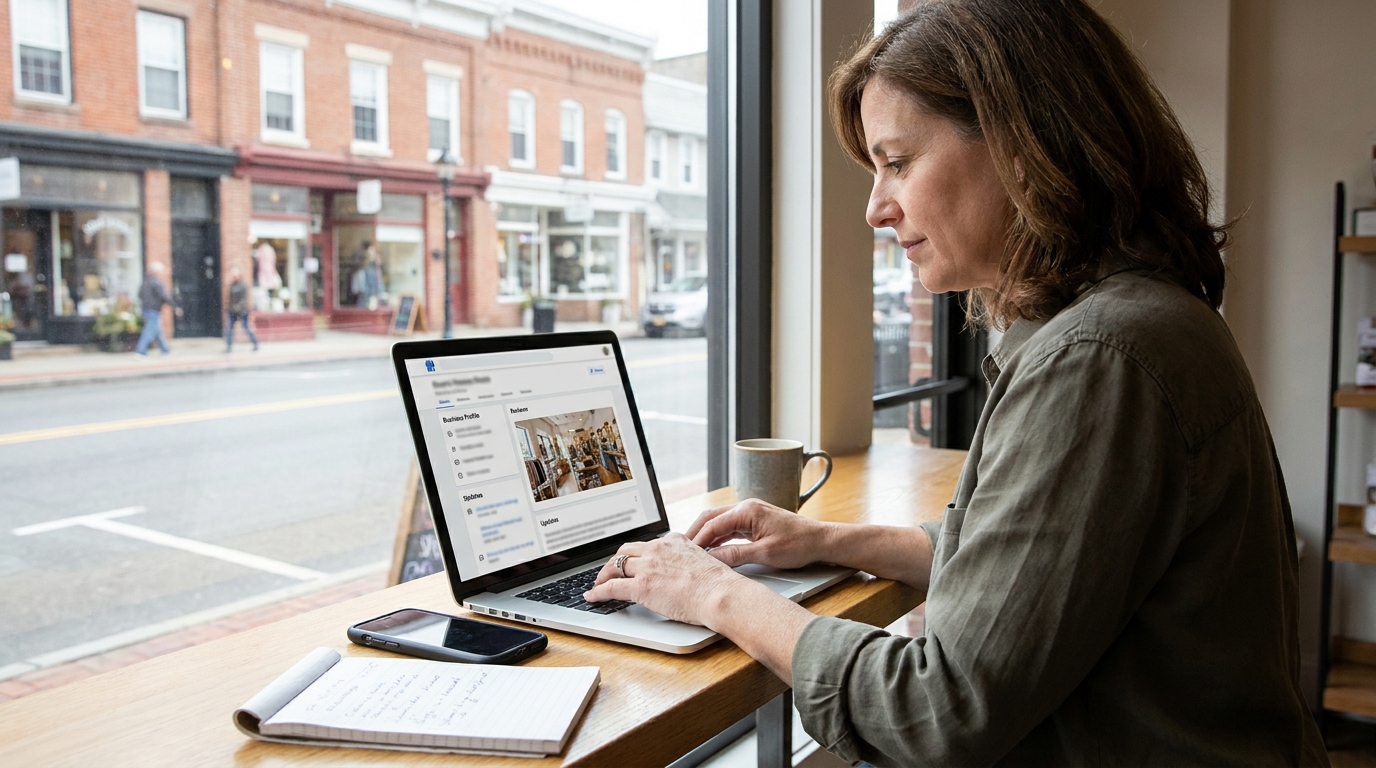
Your Google Business Profile is the single highest-ROI free action available this year. It’s also the most commonly neglected. Fixing it costs nothing but attention.
The 30-day freshness rule that changes everything
Profiles that go quiet for 30 days see measurable drops in local visibility, according to GBP performance research published in 2025. The minimum baseline is one real photo per month and one update post per event or business change. Best practice is weekly posts, bi-weekly photos, and short-form video where possible. Avoid stock photos; real images of your team, your workspace, and your actual work improve perceived authenticity and are what Google’s algorithm rewards for engagement.
For a concise recap of recent platform updates that affect freshness and features, see this roundup of the top changes to Google Business Profile in 2026.
Reviews, category selection, and the AI-driven Q&A shift
Reviews account for roughly 20% of local ranking weight, according to Whitespark’s Local Ranking Factors research, and Google now factors in review velocity and sentiment, not just volume. Respond to every review within 24 hours and use natural, specific language that mirrors how your customers talk about your business. Category selection matters more than most business owners realize: Google updated available categories more than 40 times in 2025, so audit your primary category quarterly. A single mismatch can significantly drop your local pack rankings overnight.
The traditional Q&A section on GBP is now AI-driven, with Google pulling answers directly from your website. A short FAQ page on your site feeds exactly what Google’s AI surfaces when someone asks about your business. Write it, publish it, and link your GBP to the most relevant landing page rather than your generic homepage.
Building AI-ready content that actually gets found
Content strategy in 2026 is not about writing more. It’s about writing in a structure that AI can extract and cite. The businesses that show up in AI Overviews are the ones that made it easy for the machine to find a direct answer. For a deeper look at multi-channel approaches and visibility tactics for local firms, review the AI Search Visibility Strategy 2026 for NJ SMBs.
Structure your pages to answer one question at a time
Place a 60, 100 word direct answer at the top of each page section before adding supporting evidence. Use question-based H2 headings that mirror how your buyers actually search. Keep sections modular and self-contained so AI can pull one section without needing to parse the full page. This structure is the foundation that AI models draw from when generating summary answers.
Schema markup that makes AI work in your favor
Three schema types are non-negotiable for small businesses in 2026: LocalBusiness, FAQPage, and HowTo. Schema is machine-readable context, it tells AI what your content is about, not just which words appear on the page. Every piece of content inside your schema must also be visible on the actual page; hidden schema markup does not qualify and can trigger penalties. Validate all markup before publishing using Google’s Rich Results Test tool. For implementation specifics, see this schema markup guide for small businesses.
Local service pages and long-tail keywords that convert
This is where your 2026 SEO strategy connects directly to revenue. Broad keywords attract browsers. Specific, location-anchored keywords attract buyers. The difference between the two is where local SEO earns its keep.
The three-part keyword formula for service businesses
The formula is Service + Location + Intent Signal. “Emergency plumber in Rahway NJ” converts at a dramatically higher rate than “plumber NJ” because the searcher is already in buying mode. Build one dedicated landing page per city or town you serve. Format page titles as “Service for City | Business Name” and weave in local references like neighborhoods, landmarks, and community context throughout the copy. These signals confirm geographic relevance to both searchers and search engines.
Local citations and directory listings as trust signals
Consistent NAP data across local directories reinforces the location signals Google needs to rank your business in the map pack. Hyperlocal directories carry particular weight because they confirm relevance at the town level, not just the regional one. Why Local Business Directories Still Matter in 2026 explains the specific value of town-focused listings for small businesses in New Jersey. A resident in Summit or Union searching for a local service on a platform organized by their specific town is already in high-intent mode, your listing meets them exactly where they are.
Small business SEO strategy for 2026: 90-day action plan and tools
The sequence matters as much as the actions. Doing these in the right order prevents wasted effort and gives each phase a foundation to build on.
Phase-by-phase breakdown: what to do in each 30-day block
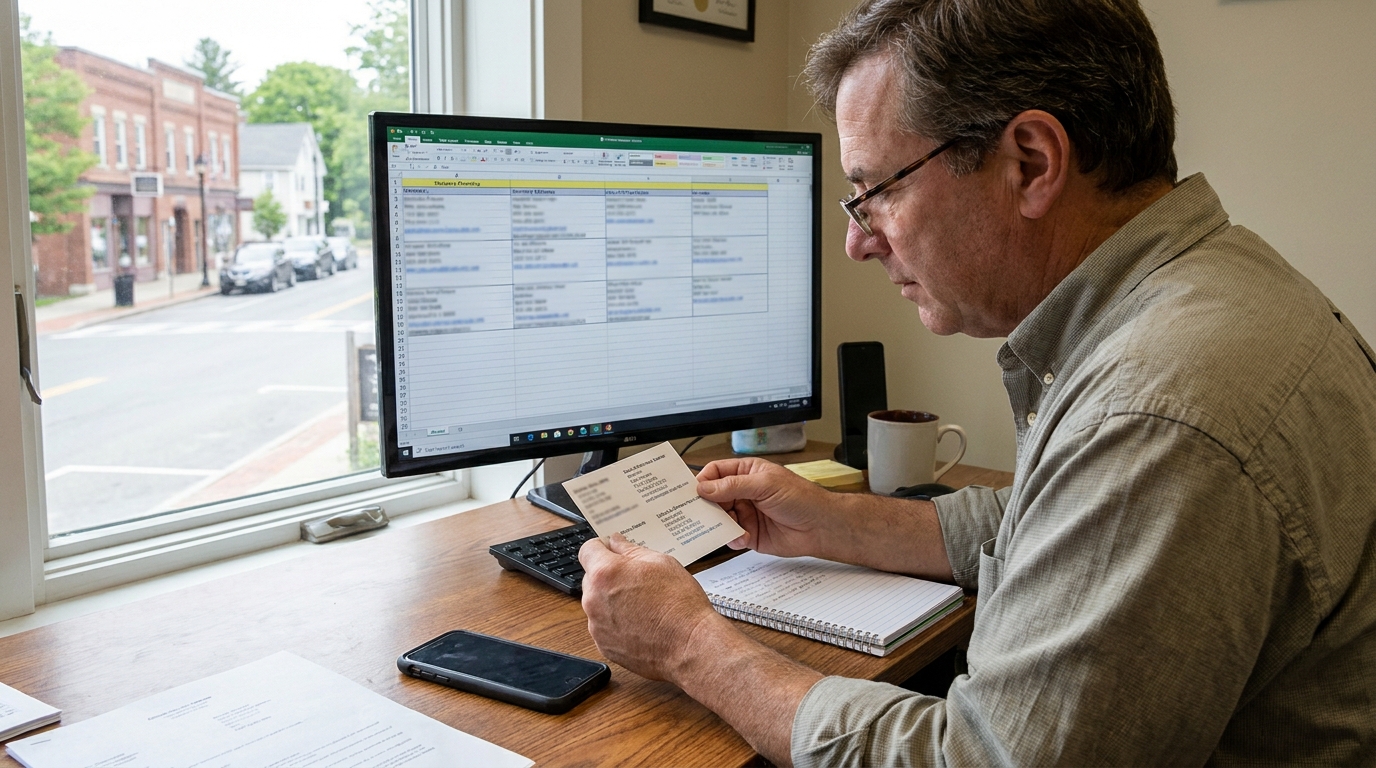
- Days 1, 30: Set up Google Search Console and Google Analytics 4. Fully optimize your GBP using the criteria above. Run a free Screaming Frog audit (covers up to 500 URLs at no cost). Document your baseline: current impressions, clicks, and GBP action rate.
- Days 31, 60: Add one paid keyword tool, Ubersuggest at $29/month or Keysearch at $24/month covers the full research and audit scope most small businesses need (prices as of 2026; verify current plans on vendor sites). Build or rewrite two to three local service pages using the three-part keyword formula. Add FAQPage schema to your top pages.
- Days 61, 90: Activate a lightweight rank tracker like Keyword.com at roughly $3/month (verify current pricing). Publish two AI-structured content pieces that answer real buyer questions. Review your four core KPIs and adjust where the data points.
This lean tool stack runs well under $60 per month total, a real-world cost for a complete small biz SEO checklist that covers technical audits, keyword research, and rank tracking without enterprise pricing. For comparisons of low-cost options, check this list of affordable SEO tools.

When the DIY path isn’t the right call
If this plan looks right but executing it while running a business feels unrealistic, AgencyServicesGRP.com offers SEO services built around 2026 search signals, including structured content, local authority signals, and GBP management for small businesses that need organic traffic to grow. You don’t need to decode every algorithm update. You need a team that already handles it.
For NJ business owners who want immediate local visibility, online directory for local business listings on NJLocalInfo.com put your business in front of residents actively searching in your service area, a fast, affordable complement to your broader SEO strategy that delivers targeted local exposure from day one.
4 KPIs to track whether your SEO is working
Measurement is what separates businesses that commit to SEO from those that abandon it after two months. These four metrics give you a clear read on progress without requiring an analytics background.
The metrics that matter in each phase of the 90 days
- GBP action rate: The ratio of direction requests and website clicks to total profile views. Aim for 5% or higher as a baseline benchmark. This is the fastest indicator that your profile optimization is working.
- Organic impressions in Google Search Console: Week-over-week growth signals that your content is getting indexed and crawled. Impressions grow before clicks do, expect that sequence.
- Local pack appearances: How often your business shows in the map pack for your target keywords. This measures whether your local trust signals are registering.
- Conversion actions: Form fills, calls, or bookings traced back to organic search. This is the metric that connects SEO effort to actual revenue.
When to adjust and when to stay patient
SEO shows movement in 60, 90 days for most small businesses. Early green flags include rising impressions before rising clicks, that’s the normal sequence, not a warning sign. A real problem looks like zero indexing after 30 days, persistent NAP mismatches across platforms, or a GBP that shows no action rate growth after a full month of consistent updates. Those issues warrant immediate attention. Everything else warrants patience and consistency.
Small business SEO strategy for 2026: the 90-day plan in full
You now have a sequenced, affordable plan: a fully optimized GBP, AI-structured content, town-level service pages, a lean tool stack costing well under $60 per month, and four KPIs to track ROI from day one. The 2026 SEO strategy for small businesses is not about outspending competitors. It’s about outsequencing them.
For NJ business owners, combining a presence on a hyperlocal platform like NJLocalInfo.com with the right on-site strategy gives you both the directory visibility and the organic foundation to compete in your local market. Your customers are searching by town. Your strategy should meet them there.
Common questions about small business SEO in 2026
How long does it take to see results from SEO in 2026?
Most small businesses see measurable movement in GBP visibility within 30 days of consistent updates. Organic ranking changes typically take 60, 90 days to appear in Google Search Console data. Revenue impact becomes more predictable around the 5, 7 month mark, but the 90-day KPIs above give you clear early indicators well before then.
Do I need to hire an SEO agency, or can I do this myself?
The 90-day plan in this article is fully DIY with free and low-cost tools. If you want faster results or don’t have time to manage it consistently, AgencyServicesGRP.com offers SEO services built around 2026 search signals, including structured content strategy and GBP management.
What is AI-resistant SEO and why does it matter for my business?
AI-resistant SEO means structuring your content and local signals so that AI search tools, including Google’s AI Overviews, pull from your pages rather than your competitors’. It focuses on direct answers, schema markup, and local authority rather than keyword density alone. Businesses that structure their content this way are positioned to appear inside AI-generated answers, which now carry higher visibility than standard organic positions below the fold. For guidance on how to optimize content for AI search, see this practical resource.
Is a local directory listing still worth it in 2026?
Yes, especially for local businesses targeting nearby customers. Consistent NAP citations across trusted local directories signal to Google that your business is established and geographically relevant. Town-specific platforms like NJLocalInfo.com are particularly valuable for NJ businesses because they confirm relevance at the hyperlocal level with a targeted, community-focused audience that national directories don’t reach.
Which three tools should a small business start with if budget is tight?
Start with Google Search Console and Google Analytics 4 at no cost, then add Screaming Frog for technical audits (free up to 500 URLs). Once you have a baseline, add one paid keyword research tool. Keysearch at $24/month or Ubersuggest at $29/month each cover keyword research, competitor analysis, and rank tracking in a single platform, solid capability without the enterprise price tag.
Know this business? Click here to leave a quick testimonial.
All businesses listed are independently operated. While we aim to provide accurate information, please verify each provider’s credentials, licensing, and insurance directly before hiring.
 |
Get The Biggest & Best Traffic For Your BusinessClick Here – Let Us Scale Your Organic Traffic with Our AI Busting SEO Service |
Listen to the podcast below for more details …
Visit our Agency Services Website (AgencyServicesGRP.com) for more details.
NJ Local Business Directory Listings By Town
Find local businesses and services serving your community throughout New Jersey. [Get Listed]
Advertise your local business in New Jersey here on our NJ Business Directory & Classifieds Ads section of NJLocalinfo.com. [Get The Benefits of Listing]
|
GetThe Biggest & Best Traffic For Your BusinessClick Here – Let Us Scale Your Organic Traffic With Our AI Busting SEO Service. |
Audio Message For Business Owners Below …
Visit our Agency Services Website (AgencyServicesGRP.com) for more details.