

Key Takeaways
- An online directory for local business builds citation authority by distributing your business name, address, and phone number across the web, information search engines use to verify and rank you locally.
- Authority, audience relevance, and NAP consistency matter far more than the number of directories you're listed on.
- Claim core platforms first: Google Business Profile, Apple Maps, Bing Places, Yelp, and Facebook. Then layer in community-focused directories.
- For NJ businesses, a hyperlocal directory like NJLocalInfo.com can deliver town-targeted visibility that complements what national platforms offer.
- A complete, accurate, actively maintained listing usually outperforms multiple rushed or low-quality listings.
An online directory for local business does more than list your contact details, it builds citation authority that helps you rank in local search. Most small business owners think they've handled their online presence once they've claimed a Google Business Profile and set up a Yelp page. They haven't. Many local businesses end up listed on fewer than five directories, and most of those listings are incomplete, inconsistent, or sitting stale without a photo or updated business hours. In dense suburban markets like New Jersey, where customers often search by town rather than just by city, that gap has real consequences.
Platforms like NJLocalInfo.com are built for exactly that kind of market: hyperlocal, community-level targeting across specific New Jersey towns. The directory organizes listings by town so residents in Westfield, Summit, or Rahway find businesses serving their area directly, not a national list of vaguely related results. This article breaks down how online directories for local businesses actually function, which ones deserve your time first, and how to build a listing that moves the needle on your local visibility.
How an online directory for local business actually works
The connection between directory listings and local search rankings
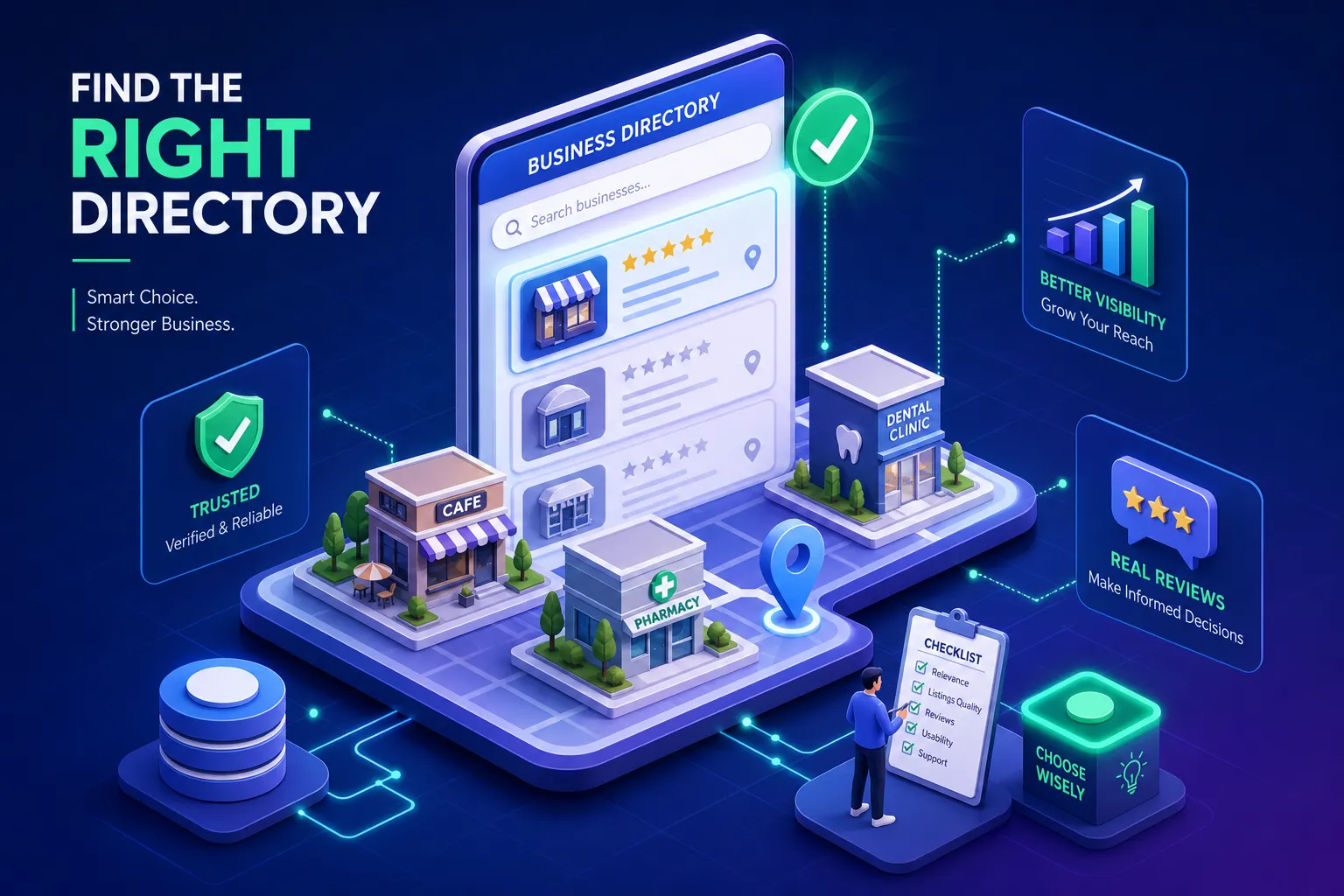
When you list your business in an online directory, you create a citation: a mention of your business name, address, and phone number (NAP) that exists on a third-party platform. Search engines like Google cross-reference these local citations across the web to confirm your business is legitimate, active, and located where it claims to be. The more consistent and authoritative those citations are, the more confident search engines become in ranking your business for relevant local searches. This is the engine behind local SEO. Directories aren't just referral traffic sources, they're trust signals that shape how search engines perceive your credibility.
In 2026, citations still matter primarily because of what they do for verification, not because volume alone moves rankings. Accurate, consistent business data across credible business directory sites tells Google that your business is real and stable. That trust feeds directly into local pack and Google Maps visibility.
How listing data spreads further than you think
Data aggregators like Data Axle and Neustar Localeze pull business information from major directories and distribute it to dozens of other apps, mapping tools, and navigation platforms. A business submits once, the aggregator validates the data and normalizes it, then pushes it outward to partner channels. One well-maintained listing on a major platform can ripple through the broader local search ecosystem, fueling accuracy across platforms you may never have directly claimed. This is exactly why getting your core details right from the start matters more than rushing to claim fifty mediocre listings.
Free business directories vs. paid business directory sites
What you get with free listings and where they fall short
Free business directories like Google Business Profile, Bing Places, and Yelp are non-negotiable starting points, not because they're free but because they're high-authority and actively searched by real consumers every day. Google Business Profile alone directly affects visibility in Google Search and Google Maps, making it the single most important listing any local business can claim. For more technical guidance on how Google expects local business data to be marked up, see Google's documentation on structured data for local business. The downside of relying only on free directories is that quality control varies widely. Many free platforms are cluttered with outdated, duplicate, or spammy listings, which dilutes the environment your business sits in. Free still works, but it requires consistent maintenance on your end.
When a paid or community-focused listing earns its cost
Paid and curated directories earn their value when they serve a specific, relevant audience. A plumber listed on a general national directory competes with thousands of others for attention that's spread thin. That same plumber listed on a niche or community-focused platform, where the audience is actively searching for local tradespeople in their specific town, gets seen by the right people at the right moment. The real decision isn't free vs. paid; it's low-intent audience vs. high-intent audience. Paid directories with strong moderation and a focused audience can outperform a dozen free listings on low-traffic platforms, depending on the directory's reach and relevance to your customer base.
The platforms worth claiming first
The non-negotiable core directories every local business listing needs
Priority order matters here. Google Business Profile comes first because it directly controls visibility in Google Search and Maps. Apple Business Connect (Apple Maps) is important for iPhone users, who represent a significant portion of local mobile searchers. Bing Places covers Microsoft search traffic, a meaningful audience worth capturing. Facebook remains one of the top citation sources with broad consumer reach and active local search behavior. Yelp rounds out the core five, especially for service businesses, restaurants, and retail shops where reviews carry heavy weight. NAP must match exactly across all five platforms. Inconsistencies, even minor ones like “St.” vs. “Street,” create conflicting signals that weaken your local ranking position.
Neighborhood and community directories that often get skipped
Nextdoor stands out as an underused asset. It's hyperlocal by design and reaches residents in specific neighborhoods who are actively requesting recommendations for local businesses. BBB adds credibility signals that matter for service businesses, where trust is part of the sale. Yellow Pages still feeds citation aggregators and carries historical authority worth capturing. For New Jersey businesses, community-level directories that organize listings by specific town carry extra weight in a market where residents have a strong preference for local, familiar businesses over national chains. These are the platforms that broad national directories don't cover well, and they're often where the highest-intent local searchers end up.
Why a hyperlocal NJ directory for local business complements national platforms
The core problem with national directory traffic for NJ businesses
When a business in Westfield, NJ lists on a national directory, its profile competes with thousands of similar businesses across the state and beyond. The traffic it receives is geographically diluted and low in local intent. National directories are built for broad search, not neighborhood-level discovery. For NJ's dense suburban market, where residents often search by town and loyalty to local businesses runs high, that mismatch can create a real visibility gap. A business that shows up on page three of a national directory behind competitors in other states isn't gaining much from that listing.
How NJLocalInfo.com fills that gap for New Jersey businesses
NJLocalInfo.com is built specifically around this problem. Listings are organized town by town across Union County and surrounding NJ communities, so a business in Rahway or Summit appears in front of residents from that specific town who are already searching locally, not buried beneath national results or irrelevant competitors. The platform connects local residents directly with businesses and services in their area, which means the traffic it drives is relevant by design. Businesses can get listed for targeted local visibility, and the platform also connects users with SEO growth services through its affiliated agency, AgencyServicesGRP.com, for owners looking to expand their broader organic presence over time. For businesses seeking more structured local data and statewide lists, see the NJ Business Database, NJ Book Of Lists for additional listing and outreach options.
Ready to get your NJ business in front of the right local customers? Claim your online directory for local business listing on NJLocalInfo.com and reach residents already searching in your town. Visit NJLocalInfo.com to get started today.
What goes into a listing that actually drives results
The fields that carry the most weight
NAP consistency is the baseline requirement: your business name, address, and phone number must match exactly across every directory, every time. Beyond that, the fields that influence results most are your primary business category (this selection carries outsized weight in how search engines classify you), your business description with locally relevant keywords used naturally, photos including both exterior shots and service or product images, and your hours including special holiday schedules. Incomplete profiles signal low effort to both search engines and potential customers. A fully built-out listing communicates legitimacy in a way that a sparse one simply cannot. If you want a quick primer on why NAP consistency matters and how to maintain it, BrightLocal's explainer on what is NAP is a helpful resource.
Keeping listings accurate and active over time
A listing published and then forgotten loses value fast. Hours change, phone numbers change, services evolve, and platforms occasionally overwrite your data with information pulled from third-party sources you didn't know were feeding into your profile. Build a monthly review habit: check that NAP is still accurate, add seasonal photos, update holiday hours, and respond to any new reviews. This maintenance layer is where most businesses quietly leak local search value. Staying active on your listings signals to both platforms and search engines that your business is current and engaged.
How to know if your directory strategy is actually working
What to measure and how to set it up
Directory listings don't produce results overnight. Citations from high-authority platforms typically begin influencing rankings within four to eight weeks, though the exact timeline varies based on each directory's indexing speed, moderation process, and how quickly Google crawls the new data. The full cumulative effect of a broader citation-building effort across multiple business listing services often takes several months. To track impact, add UTM parameters to the URLs you use in your listings so referral traffic from each directory shows up cleanly in your analytics. Use unique call-tracking numbers on high-priority listings if phone leads are central to your business. Track local pack rankings for your core keywords every two to three weeks rather than daily, since daily fluctuations create noise that obscures real trends.
A simple tracking habit that keeps listings working for you
Keep a one-page record that includes each directory name, the listing URL, NAP status (accurate or needs update), and the date of your last review. Schedule a monthly check-in to work through the list. Flag and remove duplicate listings, since duplicates split citation authority and introduce conflicting signals that hurt local rankings. Over a three-to-six month window, this habit tells you clearly which directories are sending real traffic and which are just taking up space in a spreadsheet. For a deeper discussion on whether citations still matter and how to prioritize them, Whitespark's analysis of do citations matter for local SEO is worth a read.
Start where it matters most
A local business directory listing is not a one-time task, it's an ongoing visibility asset that requires real attention to deliver real results. The businesses that get the most from their directory presence claim the right platforms in priority order, build complete and accurate profiles, and keep those listings current rather than walking away after the initial setup.
For NJ businesses, layering an online directory for local business like NJLocalInfo.com on top of the national core platforms gives you targeted, community-level visibility that broad national directories alone can't match. Claim your Google Business Profile today if it isn't done, work through the priority list from there, and add NJLocalInfo.com as the NJ-specific layer that connects you directly to residents in your town who are already looking for what you offer. For ongoing tips on citation management and local listing best practices, check our blog.
Frequently asked questions
What is an online directory for local business and how does it help with SEO?
A local business directory is a platform where businesses list their name, address, phone number, and other details so customers can find them. Each listing creates a citation that search engines use to verify your business information across the web. Consistent, accurate citations from authoritative directories build trust with search engines, which strengthens your visibility in local search results and Google Maps.
How many directories should a small business be listed on?
Quality beats quantity. Focusing on 10 to 15 high-authority directories with complete, accurate profiles is a practical target that generally outperforms having 50 rushed or low-quality listings, though the right number ultimately depends on your market and category. Start with the core five (Google, Apple Maps, Bing, Yelp, Facebook), add trusted general directories like BBB and Yellow Pages, then layer in community-focused and niche-relevant platforms that serve your specific audience.
What is NAP consistency and why does it matter?
NAP stands for name, address, and phone number. NAP consistency means these three details are identical across every platform where your business appears online. When search engines see conflicting versions of your business information, it creates doubt about which listing is accurate, which can weaken your local rankings and confuse customers who find outdated contact details.
Is NJLocalInfo.com only for businesses in specific NJ towns?
NJLocalInfo.com is focused on New Jersey communities, with town-by-town listings organized across Union County and surrounding NJ areas including towns like Summit, Westfield, Rahway, and Union. The platform is designed specifically for the NJ market, making it most valuable for businesses and service providers who serve customers in these communities and want targeted, local visibility rather than competing in a national pool.
How long does it take for a new directory listing to show results in local search?
Most new directory citations begin to influence rankings within four to eight weeks, though the timeline varies based on the platform's authority, its moderation process, and how quickly search engines index the new listing. High-authority platforms like Google Business Profile tend to produce faster results, while a broader citation-building effort across multiple directories can take several months to show its full cumulative effect. Plan for at least one to two months before expecting measurable movement.
Do free directories work as well as paid ones for local SEO?
Free high-authority platforms like Google Business Profile and Yelp perform extremely well and should be claimed by every local business regardless of budget. Paid or curated directories are worth the investment when they serve a specific, relevant audience that matches your customer base. The determining factor isn't cost, it's whether the directory's audience is actively searching for your type of business in your area. A paid listing in a niche or hyperlocal directory can outperform multiple free listings on low-traffic platforms when the audience fit is strong.
Know this business? Click here to leave a quick testimonial.
All businesses listed are independently operated. While we aim to provide accurate information, please verify each provider’s credentials, licensing, and insurance directly before hiring.
 |
Get The Biggest & Best Traffic For Your BusinessClick Here – Let Us Scale Your Organic Traffic with Our AI Busting SEO Service |
Listen to the podcast below for more details …
Visit our Agency Services Website (AgencyServicesGRP.com) for more details.
NJ Local Business Directory Listings By Town
Find local businesses and services serving your community throughout New Jersey. [Get Listed]
Advertise your local business in New Jersey here on our NJ Business Directory & Classifieds Ads section of NJLocalinfo.com. [Get The Benefits of Listing]
|
GetThe Biggest & Best Traffic For Your BusinessClick Here – Let Us Scale Your Organic Traffic With Our AI Busting SEO Service. |
Audio Message For Business Owners Below …
Visit our Agency Services Website (AgencyServicesGRP.com) for more details.

