

Key Takeaways
- Zero-click searches hit 68% in early 2026, up from 64.82% in 2020, but transactional and local queries still drive real clicks.
- Mass guest posting, keyword-stuffed pages, and thin content hubs have lost most of their value and now risk active penalties.
- Google’s March 2024 Helpful Content integration into core ranking made people-first content a permanent, site-wide signal, not an optional upgrade.
- Answer-first formatting, FAQ schema, and topical authority clusters are the tactics that show measurable gains in AI-first search.
- The main shift you need to make: stop measuring success in traffic volume and start measuring it in leads, conversions, and revenue.
Is SEO dead or evolving in 2026? That question is worth asking directly, because the answer shapes every marketing decision you make this year. As of early 2026, 68.01% of Google searches end without a single click to any website. That number shocks a lot of business owners the first time they hear it. But here is the critical distinction: the traffic-at-all-costs version of SEO is dead. SEO itself is very much alive, just playing by different rules.
The rules changed because the search experience changed. AI Overviews answer generic questions before users ever scroll. ChatGPT and Perplexity absorb research-stage queries that used to start on Google. The businesses winning right now are the ones that adapted early. At NJLocalInfo.com and our affiliated agency team at AgencyServicesGRP.com, we see this play out with New Jersey business owners every week: the ones building structured, authority-driven content are holding or growing their visibility, while the ones still chasing keyword volume are losing ground fast.
This article covers which old tactics you should stop using, what Google actually rewards in 2026, nine concrete changes to make today, and why local businesses hold a real edge that AI has not erased.
The tactics that stopped working: SEO’s graveyard in 2026
Specific tactics died, SEO itself did not, and that distinction matters because most doom-and-gloom coverage conflates the two. The practices that stopped producing results share a common thread: they were built on scale and manipulation rather than genuine value. Understanding which SEO tactics are dead in 2026 versus which are simply evolving is the first step to rebuilding a strategy that holds.
Mass link building and guest post schemes
Guest post mills, private blog networks, and directory-heavy link acquisition no longer compound into authority the way they did in 2018. Google’s systems now weight brand mentions, editorial citations, and topical relevance far more heavily than raw link volume. Repetitive keyword-rich anchor patterns register as a spam signal, not a ranking boost. The businesses that chased backlink counts at scale are the same ones that lost rankings when the March 2024 core update baked the Helpful Content system into permanent evaluation.
Thin hubs, keyword-stuffed pages, and the traffic-as-KPI mindset
Pages built around keyword density targets or surface-level “what is” definitions now face a brutal reality: AI Overviews answer those questions directly, before users click anywhere. Publishing 50 thin pages to rank for 50 keyword variants no longer builds momentum. It creates a content footprint that drags down your stronger pages. Google’s site-wide quality assessment means weak content anywhere on your domain affects rankings everywhere on your domain. The shift from “rank for traffic” to “rank for intent” is not a trend, it is how the algorithm evaluates content now, and every credible SEO best practices guide for 2026 reflects that reality.
Is SEO dead or evolving in 2026? How AI tools reshaped search behavior
Understanding what changed in user behavior helps you see why certain tactics stopped working and why others gained importance. This is not alarmist territory; it is context you need to make smart decisions about where SEO is evolving in 2026 and where it is simply gone.
Zero-click searches and the AI Overview effect
The 68.01% zero-click rate covers all query types, and that aggregate number is misleading without nuance. Informational and generic queries are the ones AI Overviews dominate. Someone asking “what is a mortgage” or “how do I fix a garbage disposal” rarely needs to click a website anymore. Transactional and local queries, on the other hand, still produce real clicks. Pages cited inside AI Overviews get roughly 2.1% CTR, compared to 0.9% for uncited blue links on the same results page. Getting cited in the AI answer is now a legitimate traffic channel, not a consolation prize. This is the zero-click search reality of 2026, and it demands a different way of thinking about visibility.
ChatGPT, Perplexity, and the multi-platform search funnel
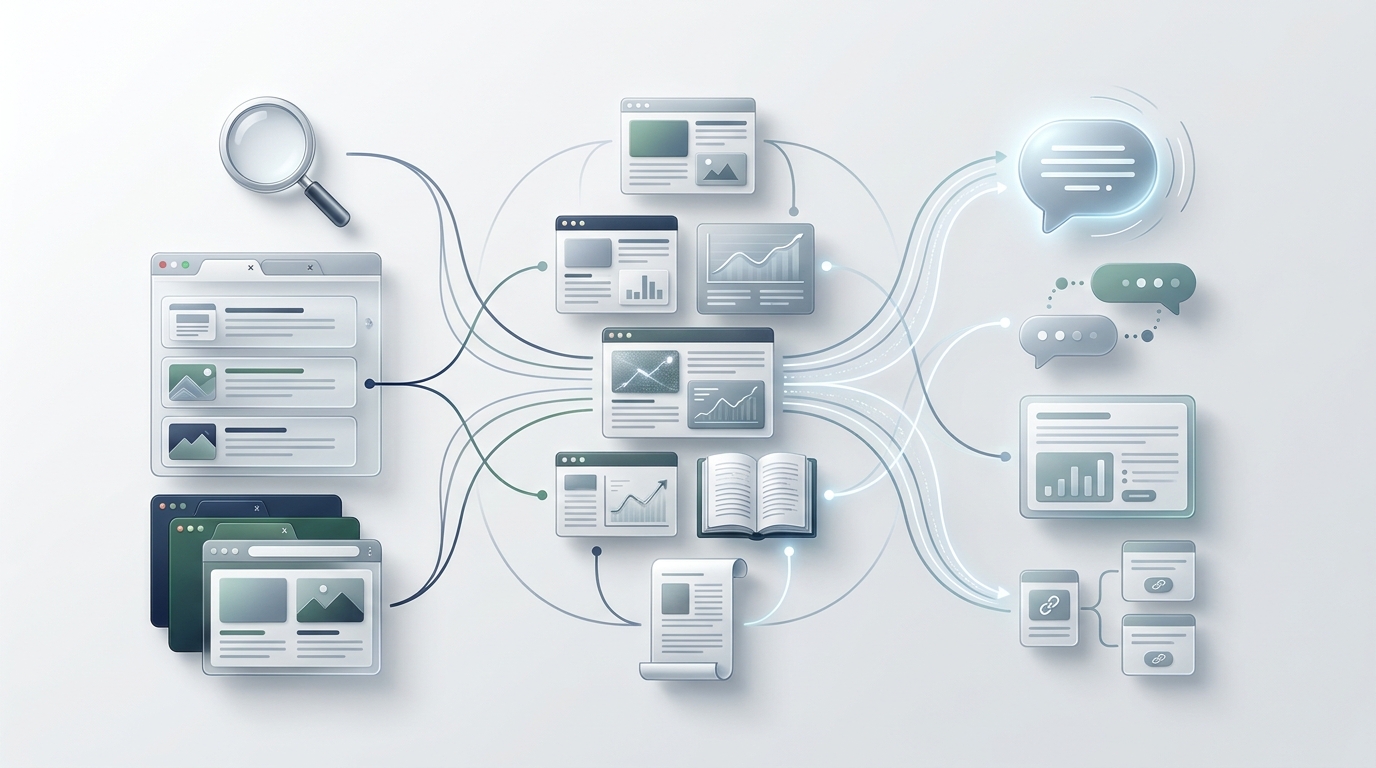
A growing share of research-stage queries now start on ChatGPT or Perplexity instead of Google. The search funnel fragmented, and “ranking on Google” no longer covers the full discovery journey. SEO in 2026 means maintaining presence across multiple surfaces: Google’s traditional results, Google’s AI Overviews, and AI-native platforms that cite authoritative sources. That is what the future of SEO actually looks like right now. Brands that appear in a high share of relevant AI-generated answers are not lucky, they structured their content specifically to be extractable, a strategy that any business can replicate with the right approach.
What Google still rewards, and why it matters more than ever
The signals that made sense to SEO professionals for years are now the only reliable path forward. The shortcuts eroded; the fundamentals compounded. Focus on these, and you build something that AI disruption cannot easily take away.
E-E-A-T, topical authority, and content that earns trust
Google’s quality evaluation framework, Experience, Expertise, Authoritativeness, and Trustworthiness, was always the target. Since March 2024, it operates as a continuous core ranking signal rather than a periodic update. Topical authority matters more than isolated keyword rankings: covering a subject comprehensively across interconnected pages now drives more ranking stability than landing one high-volume keyword with a single page. Original experience, real case studies, and expert perspectives are the content types generic AI-generated content cannot replicate at scale. This is the core of the search engine optimization evolution happening right now, and it favors businesses willing to invest in depth over those chasing shortcuts.
Page experience, structured data, and Core Web Vitals in 2026
Technical performance still differentiates sites in competitive results. Google replaced the FID metric with INP (Interaction to Next Paint) in March 2024, making responsiveness under real-world conditions more important than the old lab-based measure. Structured data carries even more weight now because schema markup feeds AI extraction directly. FAQ schema, HowTo schema, and Article schema are the formats AI systems most consistently pull when generating answers. Schema does not just help traditional rankings, it positions your content to be cited verbatim inside AI-generated responses, which is one of the most actionable SEO trends of 2026.
Nine ways to adapt your strategy for AI-first search
These nine tactics group naturally into three areas: how you structure content, how you build authority, and how you measure results. Each area addresses a different failure mode in the old SEO playbook. Together, they represent what it actually means to optimize for AI answers in 2026.
Restructure your content for AI extraction (tactics 1, 3)
First, put your direct answer in the first 50 words of the page. AI systems extract opening paragraphs most frequently, and answer-first formatting is the single clearest structural signal you can send. Second, add FAQ and HowTo schema to relevant pages so AI systems can pull structured question-answer pairs directly. Third, use short summaries, bullet points, and comparison tables throughout your content to create reusable chunks, these are the formats AI systems parse most easily. A B2B software company that applied answer-first rewrites plus FAQ schema across its top pages saw a 144% increase in organic traffic and an 89% increase in AI Overview appearances over 12 months, according to a published case study in Search Engine Journal.
Build the kind of authority AI systems cite (tactics 4, 6)
Fourth, develop topical clusters instead of isolated keyword pages. A cluster of 8 to 10 interconnected pages on a single subject signals depth of expertise; a single page targeting one keyword signals nothing.
Fifth, pursue digital PR and genuine brand mentions. AI systems cite brands that appear across authoritative sources, not just brands with high domain authority scores. Sixth, publish original data, proprietary research, or documented case studies. Generic AI-generated content cannot produce original data, that gap is your competitive advantage, and it grows every year. A retail brand that combined structured content with a consistent digital PR effort saw its name appear in a significantly higher share of relevant AI-generated answers within six months, according to reporting by Moz.

Shift how you measure and distribute (tactics 7, 9)
Seventh, move your primary KPI from traffic volume to leads, conversions, or revenue. Traffic from informational queries is shrinking; traffic from high-intent queries is still valuable. Measuring the right thing changes which pages you prioritize. Eighth, optimize for multi-platform discovery. Your content should be structured to appear in Google, Google AI Overviews, ChatGPT, and Perplexity, not just page one of traditional results. Ninth, refresh existing high-intent pages instead of publishing more thin new ones. Updating a page that already has some authority almost always outperforms launching a new page with none.
Ready to grow your NJ business in the AI-first search environment?
Get your business listed on NJLocalInfo.com for targeted, hyperlocal visibility that reaches residents searching by town, not just by category. If you need a full SEO strategy built for 2026, the team at AgencyServicesGRP.com specializes in AI-resistant organic growth for New Jersey businesses. Explore listings at NJLocalInfo.com or reach out to AgencyServicesGRP.com for a strategy consultation.
Why local businesses still hold a real advantage in 2026
Local search intent is fundamentally different from generic queries, and that difference is your competitive edge. The zero-click doom applies primarily to generic, informational queries, not to the town-level, transactional searches that drive real revenue for local businesses.
Hyperlocal queries still drive real clicks
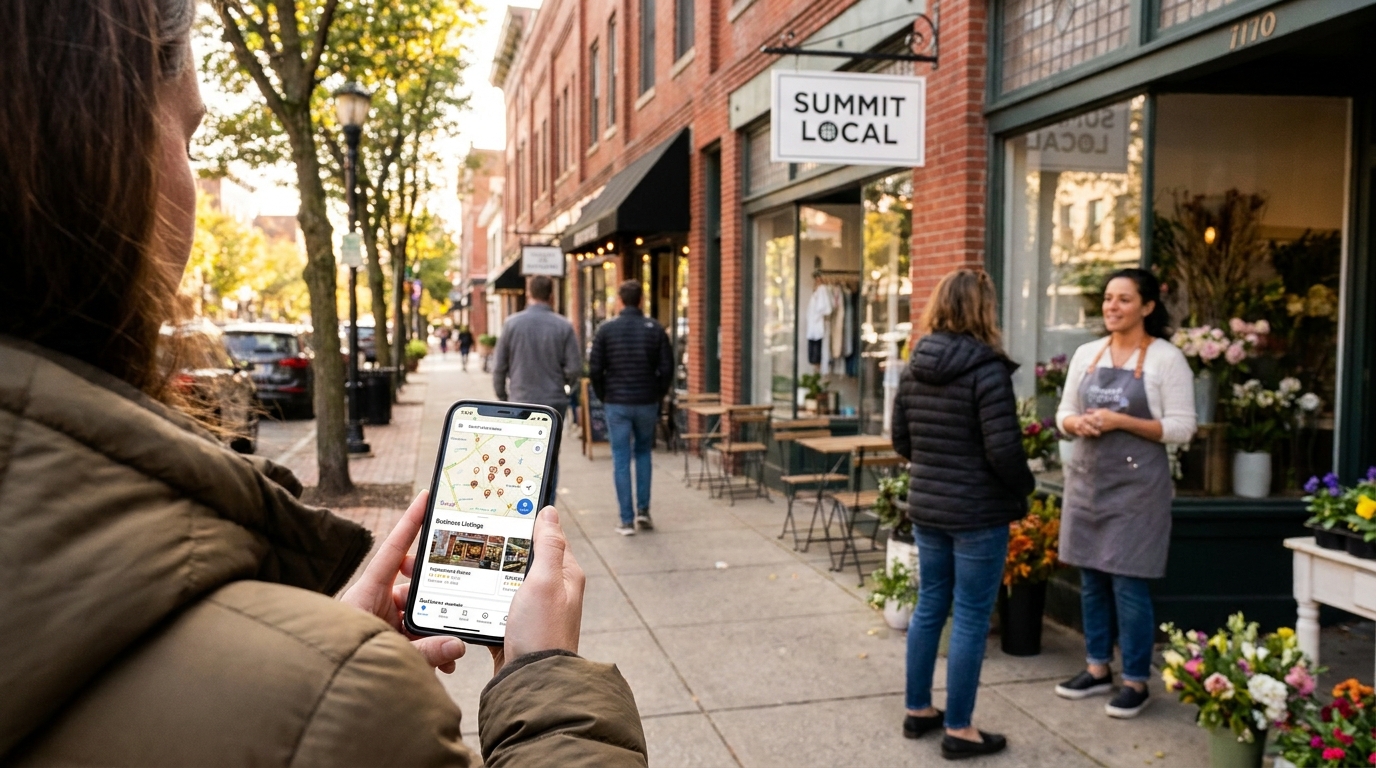
Someone searching “plumber in Westfield NJ” or “best pizza in Summit” still clicks through to a local result. BrightLocal data shows 42% of consumers click a local pack result on local queries. Town-level intent is too specific and too dynamic for AI to fully absorb: hours change, availability changes, and local trust signals matter in ways that generic AI answers cannot replicate. Structured local pages, accurate NAP (name, address, phone) data, and local citations in targeted directories still convert because the user intent is transactional, not informational. The 68% zero-click figure simply does not apply to “open now” or “near me” searches the way it applies to “what is” searches.
How NJ businesses are staying visible as search evolves
The team at AgencyServicesGRP.com recognized early that AI-resistant local SEO means building structured, town-specific content with real authority signals, not chasing broad national traffic. That approach keeps local businesses visible even as AI Overviews dominate generic queries. Businesses listed on NJLocalInfo.com benefit from a hyperlocal citation layer: a town-by-town directory structure that reinforces local relevance signals for Google’s local ranking systems. For NJ service providers in towns like Rahway, Union, or Westfield, a listing on NJLocalInfo.com functions as both a direct lead source and a structured citation that supports broader local SEO performance.
Is SEO dead or evolving in 2026? The same destination, a different road
SEO is not dead. The version of SEO built on shortcuts, link volume, and traffic-as-the-goal is done. The businesses winning right now treated the AI shift as a forcing function to finally do things right: better content structure, real authority signals, technical clarity, and a focus on business outcomes over click counts.
The practical steps are clear. Answer questions directly at the top of your pages. Add structured data so AI systems can extract your content. Build topical depth instead of chasing isolated keywords. Measure leads and revenue, not just sessions. For local NJ businesses specifically, anchor your digital presence in the hyperlocal channels where intent still converts, starting with a listing on NJLocalInfo.com and a local SEO strategy from AgencyServicesGRP.com that accounts for how search actually works today.
So is SEO dead or evolving in 2026? The evidence is clear: it is evolving, and fast. The businesses that adapt now are the ones that will still have organic traffic two years from now. The ones waiting for search to return to 2019 are going to keep losing ground.
Frequently asked questions about SEO in 2026
Is SEO still worth investing in for small businesses in 2026?
Yes, but the investment needs to target the right outcomes. Small businesses that focus on local-intent queries, topical authority, and structured content are seeing real returns from organic search. The businesses that struggle are the ones still measuring success in raw traffic volume from informational keywords that AI Overviews now absorb. Shift your SEO investment toward high-intent, conversion-focused visibility and the ROI remains strong.
Will AI Overviews completely replace organic search results?
No. AI Overviews dominate generic, informational queries, but transactional and local-intent searches still produce clicks to websites. Research shows that 42% of consumers still click a local pack result, and pages cited inside AI Overviews earn roughly 2.1% CTR, outperforming uncited blue links. The search experience will keep evolving, but organic results serve a purpose that AI answers alone cannot fulfill for purchase-ready or location-specific queries.
What is the single most important SEO change to make right now?
Restructure your top-performing pages to lead with a direct answer in the first 50 words, then add FAQ schema. This combination positions your content for both traditional rankings and AI Overview citations, which carry a measurable CTR advantage over uncited organic links. One published case study showed a 144% organic traffic increase after applying this approach across a site’s top pages. Start with the pages that already rank on page one or two, not new content.
How is local SEO different from national SEO in an AI-first search environment?
Local SEO targets transactional, proximity-based intent that AI systems cannot fully satisfy with a generated answer. When someone searches “electrician in Summit NJ,” they need a phone number, a review record, and a business they can actually hire, that intent requires a click. National SEO increasingly competes with AI Overviews for informational queries where clicks are dropping fast. Local businesses in specific NJ towns face less AI displacement than national content publishers, making local citation building, directory listings, and town-specific pages a stronger long-term investment than broad keyword targeting.
Know this business? Click here to leave a quick testimonial.
All businesses listed are independently operated. While we aim to provide accurate information, please verify each provider’s credentials, licensing, and insurance directly before hiring.
 |
Get The Biggest & Best Traffic For Your BusinessClick Here – Let Us Scale Your Organic Traffic with Our AI Busting SEO Service |
Listen to the podcast below for more details …
Visit our Agency Services Website (AgencyServicesGRP.com) for more details.
NJ Local Business Directory Listings By Town
Find local businesses and services serving your community throughout New Jersey. [Get Listed]
Advertise your local business in New Jersey here on our NJ Business Directory & Classifieds Ads section of NJLocalinfo.com. [Get The Benefits of Listing]
|
GetThe Biggest & Best Traffic For Your BusinessClick Here – Let Us Scale Your Organic Traffic With Our AI Busting SEO Service. |
Audio Message For Business Owners Below …
Visit our Agency Services Website (AgencyServicesGRP.com) for more details.