


Key Takeaways
- Google Business Profile and Apple Maps are the two platforms every brick-and-mortar store must claim and fully optimize before anything else.
- Accurate hours and fresh photos are the listing elements most likely to decide whether a nearby customer walks into your store or your competitor's.
- Listings rated between 4.2 and 4.7 stars consistently outperform both low-rated profiles and suspiciously perfect five-star records in driving walk-ins.
- Direction requests and calls inside Google Business Profile Insights are strong leading indicators of listing-driven foot traffic, combine them with promo-code tracking or POS data for the clearest attribution picture.
- Hyperlocal directories like NJLocalInfo.com aim to put NJ businesses in front of residents searching by specific town, a town-level targeting approach that broad national platforms are structurally unable to replicate.
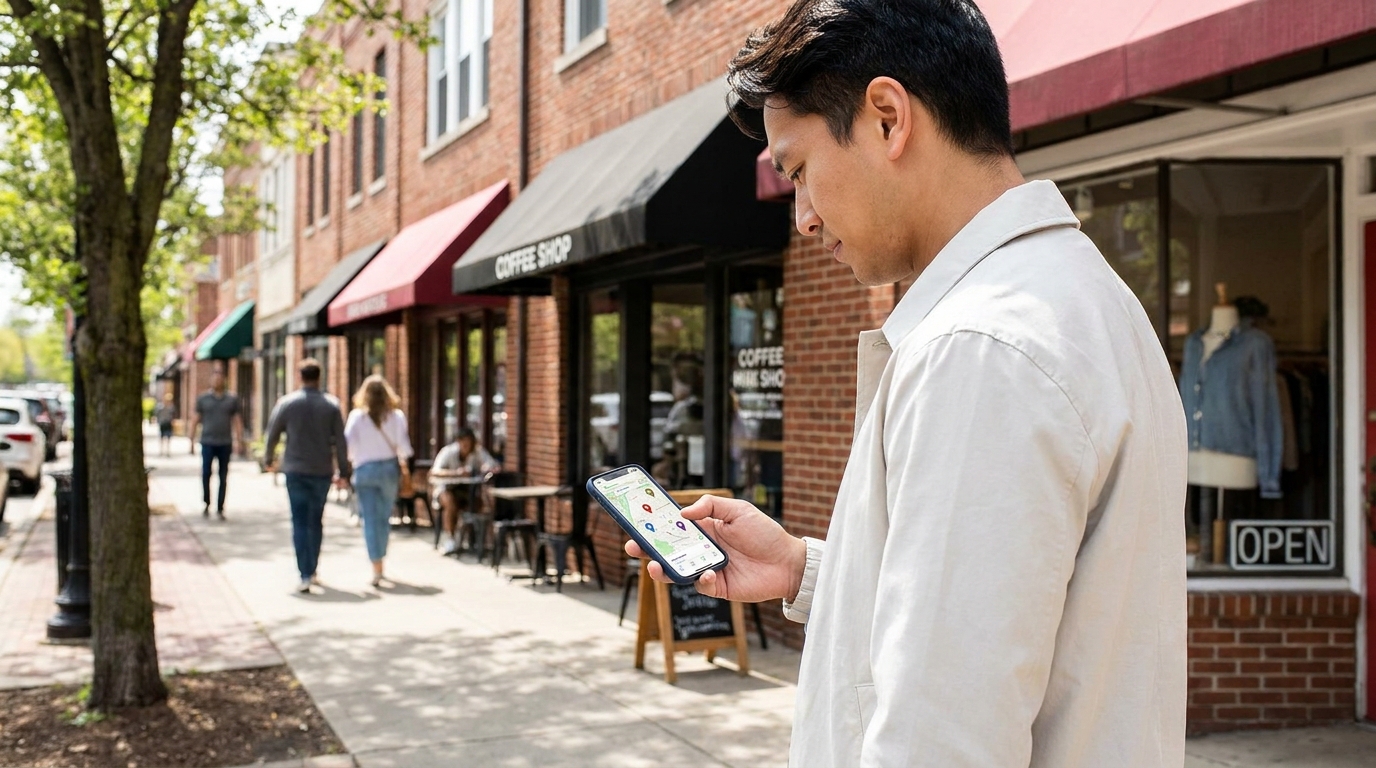
Picture this: a resident in Westfield, NJ pulls out their phone during lunch, searches for a hardware store nearby, checks a listing, reads two recent reviews, and walks in 20 minutes later. That purchase started with a directory listing, not a paid ad. Understanding how local directory listings increase foot traffic for small businesses starts with recognizing that those listings are the bridge between a consumer's search intent and a physical visit to your store. According to BrightLocal's Local Consumer Review Survey, roughly 98% of U.S. consumers search online for nearby businesses, and 83% do so at least once every 30 days.
This article breaks down exactly how that path works, which platforms carry the most weight, and which specific listing elements push a browser into a buyer who walks through your front door. Businesses across New Jersey are using platforms like NJLocalInfo.com to target residents searching in their specific town rather than a national audience. Here's what the research shows and what you can do with it starting this week.
How local directory listings increase foot traffic for small businesses: the path from search to store
How the online-to-offline journey actually works for local shoppers
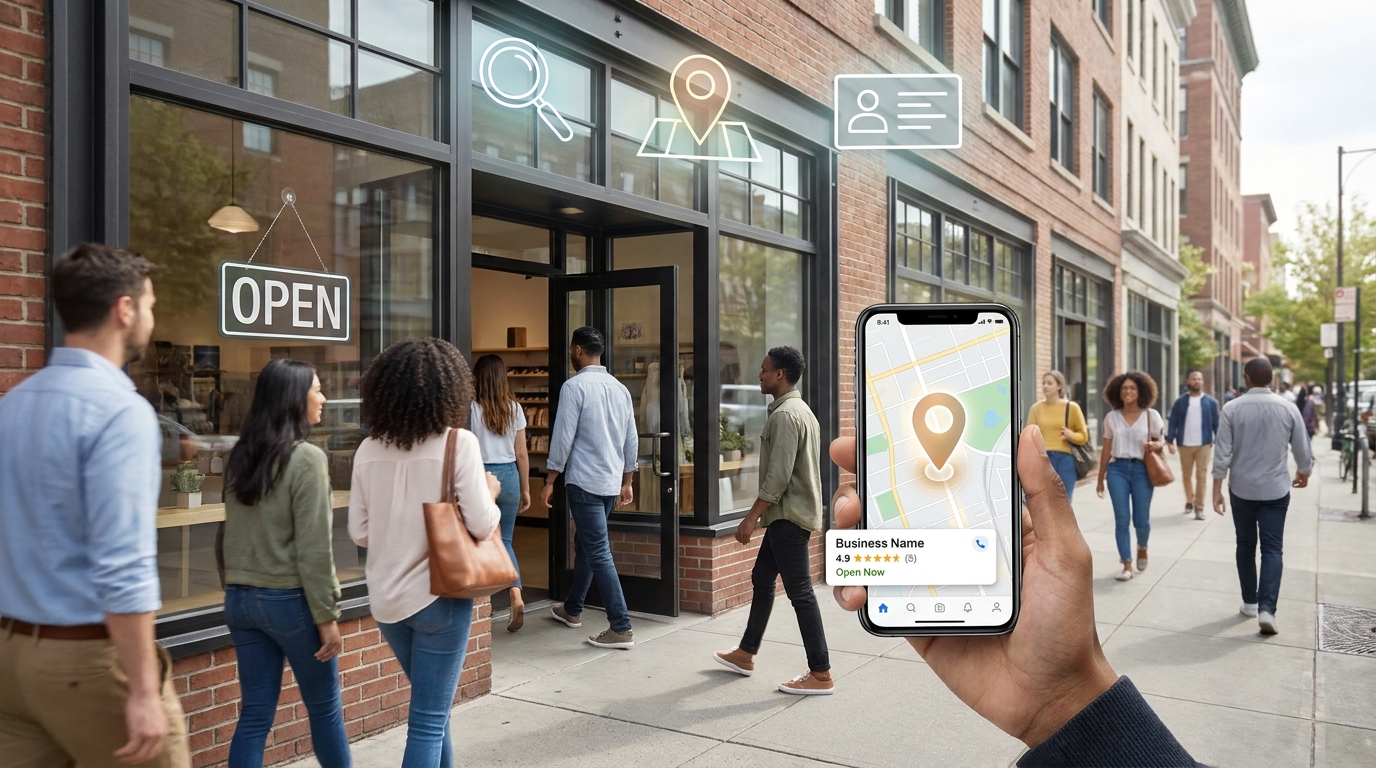
The consumer decision sequence is predictable and fast. A search triggers a directory result, the shopper scans photos and reviews, checks hours, requests directions, and visits. Many local purchase decisions begin online before the customer ever leaves home. The directory listing is often both the first touchpoint and the final push before a visit actually happens.
“Near me” searches and town-level queries signal high purchase intent. A shopper typing “plumber in Rahway NJ” isn't browsing, they need help today. That search intent is far more valuable than general web traffic, and the directory listing is what captures it.
Why the local-search moment is the highest-value window for brick-and-mortar owners
A consumer in local-search mode is already motivated and close geographically. That combination makes them far more likely to convert than someone browsing national ads on a couch three states away. Organic directory listings don't carry per-click or per-impression charges, though they do require time and consistent effort to optimize, a worthwhile trade-off given the conversion quality of local search traffic.
Compare the two experiences: someone clicking a Yelp result for “restaurants in New Jersey” sees hundreds of options across a huge metro area. Someone searching “Italian restaurant in Summit NJ” on a hyperlocal directory gets a curated, relevant shortlist. Capturing that specific, town-level search intent is one of the lowest-cost, highest-conversion acquisition channels available to a small business owner.
Which directory platforms actually send customers through your door
Google Business Profile and Apple Maps: the pair every store must prioritize first
Google Business Profile accounts for roughly 60, 85% of directory-attributable local traffic for well-optimized listings. Apple Maps captures a significant share of iPhone users and in-car navigation. Claiming and fully optimizing both is non-negotiable before you touch any other platform. Skipping Apple Business Connect leaves a gap for a substantial portion of your mobile audience.
The numbers make the case: listings with photos generate about 40, 42% more direction requests, according to Google's own platform data. Direction requests are a direct signal of visit intent. Businesses with a complete Google Business Profile see approximately 70% more physical-location visits than businesses with incomplete profiles. These two platforms are where your optimization effort should start.
Yelp, Facebook, Bing Places, and Nextdoor: category-specific drivers worth adding
Each secondary platform has a specific strength worth understanding. Yelp performs best for restaurants, home services, healthcare, and beauty, review-driven categories where social proof carries extra weight. Facebook works well for local promotions and repeat engagement. Bing Places captures the Microsoft ecosystem, including Edge users. Nextdoor delivers neighborhood-based word-of-mouth for contractors, childcare providers, and local retail.
Add these platforms based on your store's category and customer demographics, not all at once. A landscaper in Union County benefits more from Nextdoor than a boutique clothing store does. NJLocalInfo.com fills the gap these national platforms leave behind by organizing listings town by town across New Jersey, putting your business in front of residents who are already searching in your exact community.
The listing elements that increase foot traffic for small businesses
The listing details that decide whether someone walks in or walks past
Incorrect or missing hours directly cost you visits. According to BrightLocal's Local Consumer Review Survey, 47% of consumers turn to a competitor when a store's hours are wrong or missing online. That's nearly half your potential walk-ins going next door because of a data error you could fix in two minutes. Keep regular hours, holiday hours, and special hours current at all times.
Photos reduce uncertainty about your storefront, interior, and products. Listings with photos earn roughly 40, 42% more direction requests, a direct, measurable signal of visit intent. Your primary category determines which searches surface your listing at all. These elements aren't optional polish; they're the core conversion mechanics of every listing you manage.
This is also where local citations come into play. A local citation is any online mention of your business's name, address, and phone number (NAP), on directories, data aggregators, or local websites. Consistent citations across multiple platforms reinforce your business's legitimacy with search engines, strengthen your local search rankings, and make it more likely that a nearby shopper finds your listing before a competitor's.
Attributes, offers, and posts: the extras that create urgency and reduce friction
Attributes like accessibility, curbside pickup, and accepted payment types help specific customer segments self-qualify before they visit. When a customer with a mobility concern sees “wheelchair accessible” in your attributes, they're more likely to commit to the visit. When they don't see it, they look elsewhere. Fill every relevant attribute field for your category.
In-store offers displayed on your listing can tip a price-conscious shopper from “maybe” to “I'm going now.” Attach a unique promo code to your directory offer; you'll use it later to measure redemptions at the register. Google Business Profile posts work best as a supporting layer: publish on a regular cadence tied to a concrete reason to visit, new inventory, a weekend event, or a limited-time promotion with a clear expiration date.
How reviews and ratings shape the walk-in decision
The star rating range that earns the most trust with prospective visitors
Listings rated between 4.2 and 4.7 stars outperform both low-rated profiles and suspiciously perfect five-star records. That range signals credibility rather than manipulation. Prospective visitors are smart: they know a 5.0 rating with 8 reviews is less reliable than a 4.4 rating with 160 reviews. Review volume and recency compound the effect; fewer than 10 reviews often creates skepticism, and older reviews make shoppers question whether current service quality still matches the score.
Consistent, recent, authentic reviews are more persuasive than a high but stale total count. Aim for a steady flow of new reviews rather than a burst campaign that generates 50 reviews in a week and then goes quiet for six months.
Why how you respond to reviews matters as much as the reviews themselves
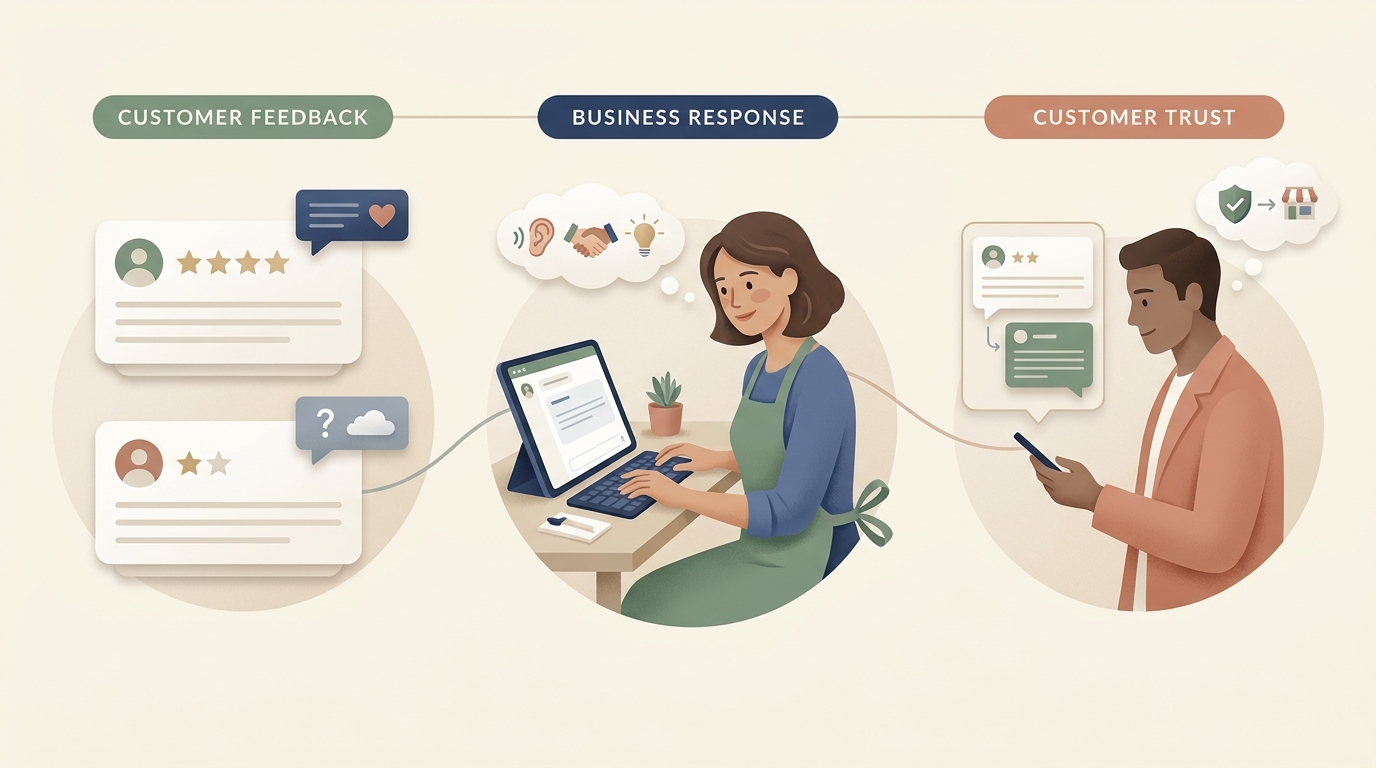
Owner responses to at least half of all reviews are associated with roughly 16% higher listing action rates, according to BrightLocal research. Prospective visitors read negative reviews specifically to judge how you handle problems. A thoughtful, specific response to a one-star review can reassure future customers more effectively than ten generic five-star replies.
Use a simple framework: respond within 24, 48 hours, acknowledge the specific issue by name, explain what changed or what you'll do differently, and keep the tone professional rather than defensive. Your response to a negative review is a public sales pitch to every future customer who reads it. Treat it like one.
Simple ways to measure how directory listings drive foot traffic for small businesses
Using Google Business Profile Insights as your leading indicators
GBP Insights tracks direction requests, calls, website clicks, and how customers found your listing (discovery vs. branded search). Direction requests are intent signals rather than confirmed visits, but tracking their trend alongside in-store sales gives a reliable proxy for listing performance. When you update photos, correct hours, or add an offer, compare the 30 days before the change to the 30 days after to isolate the impact. For stronger attribution, pair these signals with POS data or promo-code redemptions.
Promo codes, POS tracking, and a 30-day test window: connecting the listing to the purchase
The promo code method is simple and effective. Create a unique code displayed only on your directory profile, track redemptions at the register, and calculate listing-driven revenue over a defined period. Time-series analysis works the same way: compare sales or walk-in counts from the 30 days before a listing update to the 30 days after, accounting for seasonality and any active promotions.
For businesses ready to go further, third-party footfall tools and Google Ads Store Visits add more sophisticated measurement layers. A recommended 30, 90 day test structure looks like this: establish your baseline metrics in month one, complete all listing optimizations in month two, then measure and adjust in month three. Case study data shows measurable changes in direction requests and calls typically appear within 30, 60 days of completing core optimizations, with physical visit increases showing up in the 60, 90 day window when tracked through POS or promo code methods.
Why NJ businesses need a hyperlocal listing strategy, not just a national one
What national directories miss that town-level listings get right
Platforms like Yelp and Google Business Profile surface results across enormous geographic areas. A Rahway bakery competes with listings from across a metro area that spans millions of people. A resident in Summit searching for a plumber doesn't want the best plumber in New Jersey, they want someone in Summit or the next town over.
NJLocalInfo.com addresses this directly by organizing listings town by town across New Jersey. A business in Westfield is positioned in front of residents actively searching in Westfield, not a diluted regional audience. Hyperlocal search intent is among the highest-conversion traffic a small business can capture, and broad national platforms are structurally unable to deliver it at the town level.
Get your NJ business listed and start seeing results
The practical first steps are clear: claim your listings on Google Business Profile and Apple Maps, get your hours and photos right, then add a listing on NJLocalInfo.com to reach the hyperlocal NJ audience national platforms overlook. A complete NJLocalInfo.com listing gives your business town-level visibility and puts it in front of residents actively searching in your specific NJ community, an audience that tends to favor local businesses in their own town.
Getting listed on NJLocalInfo.com takes just a few minutes. Your listing puts your business in front of neighbors who are already looking for exactly what you offer. Pair it with the 30, 90 day measurement plan outlined above, and you'll have a clear, trackable path from listing optimization to real in-store results. Reach out to the NJLocalInfo.com team to get started or to learn about enhanced listing packages built for NJ service providers and retailers.
Conclusion
The path from an online search to a physical store visit runs almost entirely through local directory listings. Understanding how local directory listings increase foot traffic for small businesses comes down to a practical, repeatable hierarchy: start with GBP and Apple Maps, get the hours and photos right, generate recent reviews, respond to them consistently, and track direction requests as your first leading indicator.
For NJ business owners specifically, layering a hyperlocal listing on NJLocalInfo.com adds a town-targeted visibility layer that national directories simply don't replicate. Foot traffic growth from directory listings is a measurable, documented outcome, not a speculative one, when the right elements are in place. Many businesses have seen meaningful increases in listing engagement and in-store visits without any ad spend, though results vary by category, location, and how thoroughly optimizations are executed.
Frequently Asked Questions
Does claiming a Google Business Profile listing actually increase store visits?
Yes, and the data is specific. One cafe case study documented a 50% foot traffic increase over six months after adding and improving directory listings, with monthly direction requests climbing from 87 to 412. A bakery saw a 21% increase in dine-in visits within 30 days after correcting NAP data and removing duplicate listings across 12 directories. Optimizing an existing listing typically drives larger gains than simply claiming it, because a claimed but incomplete profile still leaves most conversion opportunities on the table.
How many directories should a small business be listed on?
Prioritize quality over quantity. Start with Google Business Profile, Apple Maps, and one or two category-relevant platforms, Yelp for restaurants, Nextdoor for home services. Then add a hyperlocal directory like NJLocalInfo.com to capture town-level searches. Consistency across all your listings matters more than sheer volume. A business listed on 20 directories with inconsistent NAP data performs worse than one listed on 5 directories with accurate, complete information on each.
What is NAP consistency and why does it affect foot traffic?
NAP stands for name, address, and phone number. When these details differ across platforms, search engines reduce confidence in the listing's accuracy, which suppresses visibility in local search results. Inconsistent NAP also confuses customers directly: a wrong phone number means a missed call, and an outdated address means a failed visit. Correct your most consequential discrepancies first, wrong phone numbers, moved addresses, inconsistent business names, and outdated hours.
How long does it take to see foot traffic results from listing optimization?
Most businesses see measurable changes in Google Business Profile direction requests and calls within 30, 60 days of completing the core optimizations: hours, photos, primary category, and attributes. Physical visit increases typically show up in the 60, 90 day window when tracked through POS data or promo code redemptions. Running a structured 30, 90 day test plan, with a clean baseline in month one, gives you the clearest picture of what the listing changes actually produced.
Is NJLocalInfo.com a good fit for service-based NJ businesses, not just retail?
Absolutely, service-based businesses may actually benefit more from hyperlocal visibility than retail does. Plumbers, electricians, landscapers, cleaners, and other tradespeople serving specific NJ towns benefit directly from town-level listing visibility because residents search for these services hyperlocally before making any contact. A homeowner in Westfield searching for a landscaper wants someone who works in Westfield, not a regional company three counties away. NJLocalInfo.com's town-by-town structure puts service providers in front of exactly that audience.
Know this business? Click here to leave a quick testimonial.
All businesses listed are independently operated. While we aim to provide accurate information, please verify each provider’s credentials, licensing, and insurance directly before hiring.
 |
Get The Biggest & Best Traffic For Your BusinessClick Here – Let Us Scale Your Organic Traffic with Our AI Busting SEO Service |
Listen to the podcast below for more details …
Visit our Agency Services Website (AgencyServicesGRP.com) for more details.
NJ Local Business Directory Listings By Town
Find local businesses and services serving your community throughout New Jersey. [Get Listed]
Advertise your local business in New Jersey here on our NJ Business Directory & Classifieds Ads section of NJLocalinfo.com. [Get The Benefits of Listing]
|
GetThe Biggest & Best Traffic For Your BusinessClick Here – Let Us Scale Your Organic Traffic With Our AI Busting SEO Service. |
Audio Message For Business Owners Below …
Visit our Agency Services Website (AgencyServicesGRP.com) for more details.

